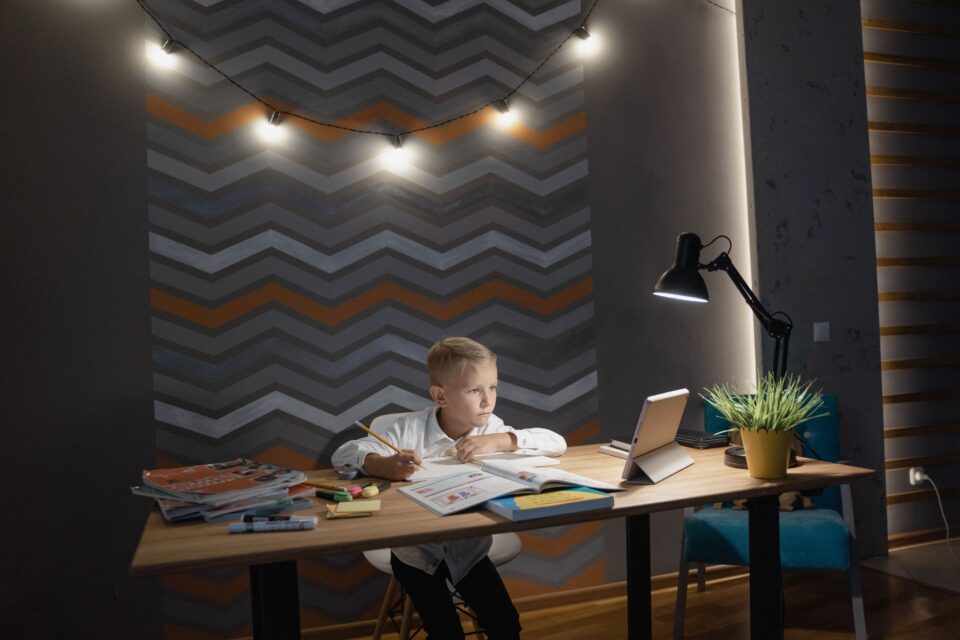
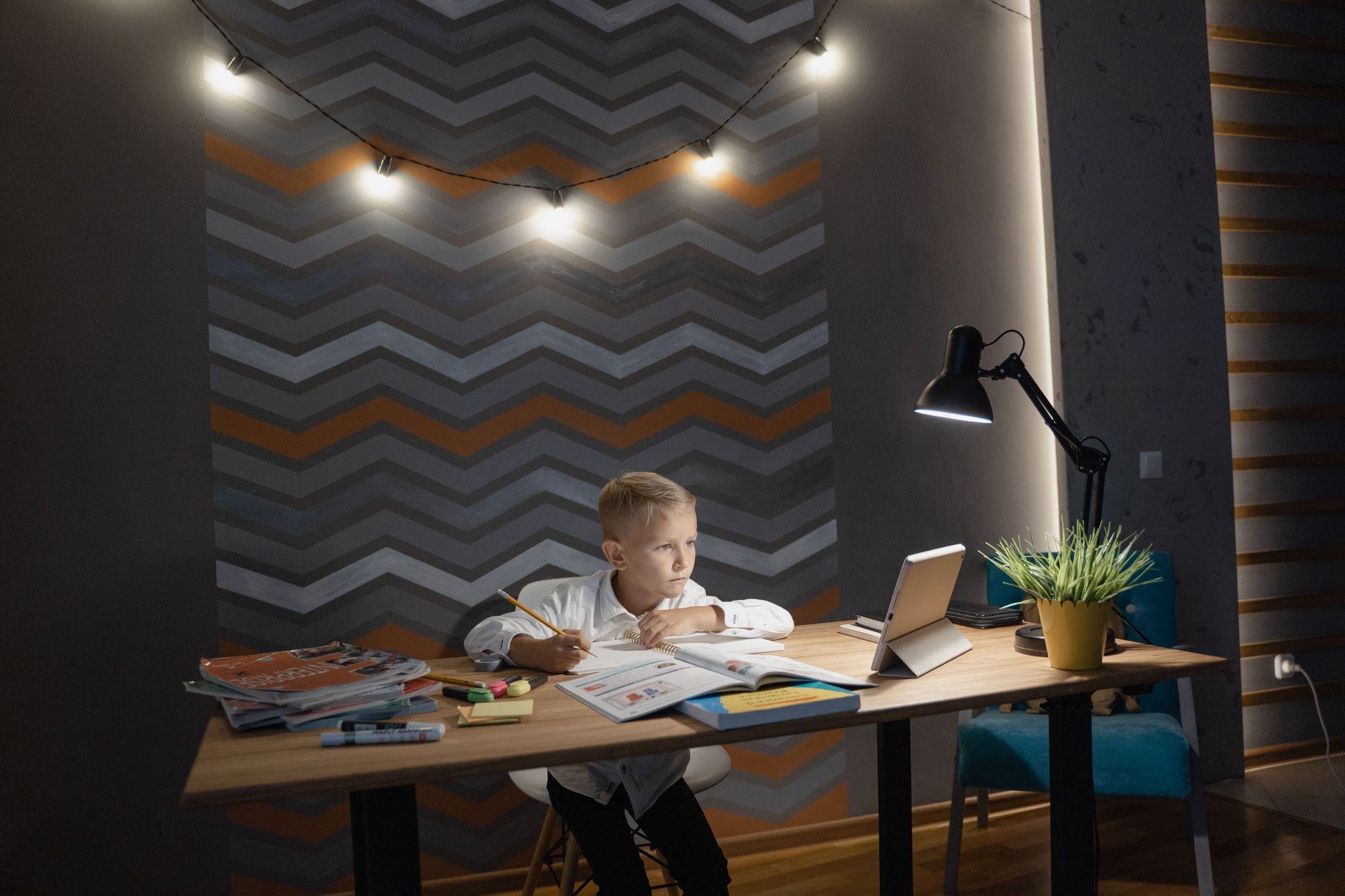
If you have been trying to build a Homework station for kids that does more than look nice in a photo, the real challenge is not buying more furniture. It is building a spot that your child can use without a daily argument. I have found that the best setups are usually simple, calm, and easy to reset at the end of the day.
That sounds obvious, but most families still miss it. They add a cute desk, a bright lamp, and a few bins, then wonder why the space turns into a dumping ground. A homework area works when it fits the way your family actually lives. If you are also planning a broader room refresh, you can browse our home organization ideas and see how storage, lighting, and layout work together.
What follows is the approach I wish more parents had before they started shopping. It is not about perfection. It is about creating a setup that lowers friction, supports focus, and grows with the child instead of becoming a project you redo every year.
What a Homework station for kids actually needs
A good homework area starts with one question. What has to happen in this space every weekday, and what can be left out? That question sounds small, but it changes everything. Once you know the real job of the station, you stop adding random decor and start choosing items that support that job.
For most children, the space needs to do four things well. It should give them a flat surface, a comfortable chair, visible storage for the daily essentials, and enough calm to get started without feeling overwhelmed. That is it. If the desk is stylish but the chair is too high, the space fails. If the bins are beautiful but the pencils are always missing, the space fails. If the lighting looks great but the child squints at every page, the space fails.
I like to think of a homework station as a small operating system. The visible parts matter, but the invisible parts matter just as much. Can your child sit down, find what they need, begin quickly, and put everything away without help? If the answer is yes, the setup is working. If the answer is no, the issue is usually not effort. It is design.
The best stations are also honest about age. A first grader needs a different setup from a middle schooler. A younger child may need broader bins, a lower seat, and less visual clutter. An older child may need more desktop area, a charging spot, and room for a laptop or tablet. When the space fits the age, homework feels less like a battle and more like a routine.
There is one more thing the station needs. It should be easy to reset. A space that takes ten minutes to clean up will slowly become a place nobody wants to use. A space that resets in two minutes can survive real family life. That is the standard I use when I design any kind of study corner.
Choose the right location before you buy furniture
Location is the first real decision, and it shapes every other one. You can buy a great desk and still end up with a poor study area if you place it in the wrong spot. I usually look for the quietest workable zone rather than the fanciest one. Quiet does not mean silent. It means predictable.
Good options include a bedroom corner, a hallway alcove, a shared family room edge, or even part of a dining room if the family uses it carefully. What matters is whether the child can sit there long enough to finish a task without constant interruptions. If the area is directly beside the TV, the snack cabinet, or the front door, expect more friction. If it is tucked into a pass-through space with no storage nearby, expect the same result. The best location is often the one that sits close to the family action but not inside the noisiest part of it.
When I choose a location, I think about three things. First, can the child reach it without needing a parent to clear the way every time? Second, can a parent see enough to offer help without hovering? Third, does the space feel emotionally neutral? Children work better in a spot that does not feel like punishment. A corner that feels like exile will not get used consistently, even if it is technically private.
Natural light is helpful, but it is not the only factor. A shaded corner with good task lighting can be better than a sunny spot with glare. Noise matters too. A child doing reading or writing may need a quieter edge of the home, while a child working on a laptop may tolerate a little more movement nearby. Try to place the station where it can adapt to schoolwork, not just one type of assignment.
If you live in a smaller home, think in terms of zones, not rooms. One narrow stretch of wall, one side of a shelf, or one end of a shared table can all become a usable station. The goal is not to claim territory. The goal is to create a dependable habit. A child who knows exactly where the pencils live and exactly where to sit is already halfway to a better routine.
Pick furniture that fits real growth
Furniture is where many families overspend. They focus on looks first and usability second. A desk that photographs well but forces a child to hunch over for thirty minutes is a bad deal, no matter how polished it looks in the room. The right furniture should fit the child now and still make sense six to twelve months later.
For younger children, I usually prefer a desk that is not too deep and not too tall. They do not need a giant surface. They need enough room for a notebook, a book, and a cup of pencils. A smaller scale helps them stay oriented. For older kids, especially those using a laptop, the desk should offer more room for materials to spread out without feeling cramped. A little extra width can reduce the clutter that often builds during longer assignments.
Chair height matters more than people think. If feet dangle too much, the child shifts and fidgets. If the chair is too low, the shoulders rise and the desk becomes uncomfortable. A footrest can help in some cases, especially when a child is still growing. The point is not to chase one perfect chair. It is to create a sitting posture that feels natural enough to keep attention on the work.
Storage furniture should also be age-appropriate. Open cubbies make sense when the child needs to see supplies at a glance. Drawer organizers work better when the child can remember categories but does not want visual noise. A rolling cart can help if the homework station shares space with another activity and needs to move out of the way. There is no universal answer. The right choice depends on how often the area is used and how much independence the child has.
Here is the simple rule I use. Buy for the next stage, not for the next decade. A child’s habits change too quickly for a rigid setup to stay useful forever. Choose pieces that are sturdy, easy to wipe down, and simple to reconfigure. If a desk can serve as a reading nook now and a laptop station later, it is doing more work for you than a decorative piece that only looks right in the current year.
A quick Homework station for kids checklist
- The desk height allows relaxed shoulders and bent elbows.
- The chair lets the child sit flat and stable.
- The surface leaves room for current school materials plus one extra item.
- The storage is reachable without climbing, stretching, or asking for help every time.
- The furniture can handle daily use, spills, and quick cleanup.
If several of those boxes are hard to check, the furniture may look right but still work poorly. That is usually where the frustration begins.
Light, power, and noise are the quiet deal breakers
People love to talk about colors and decor, but the invisible parts of a homework area are what determine whether it gets used. Light, power, and sound are the quiet deal breakers. If they are off, even a beautiful setup becomes annoying. If they are right, the whole station feels easier before the child even sits down.
Start with light. A good homework area needs layered lighting, not just one overhead source. Daylight is useful when it is available, but schoolwork often happens later in the afternoon or evening. That means the child needs a lamp that covers the desk without creating shadows across the page. I like a lamp that can angle toward the work surface and stay out of the way of the writing hand. The light should feel clear, not harsh.
Then look at power. Many older kids need a place to charge a tablet, laptop, or headphones. If chargers live in another room, the station becomes harder to maintain. A small cable tray, a nearby outlet, or a simple charging basket can remove a lot of daily back-and-forth. The idea is not to turn the desk into a tech command center. It is to prevent the homework area from becoming a scavenger hunt for batteries.
Noise is harder to solve, but you can still reduce it. If the station sits near the kitchen, try adding a small buffer such as a bookshelf, curtain, or upholstered seat nearby. Soft materials absorb some of the daily clatter that makes focus harder. If the child works better with background sound, a consistent playlist or white noise can help create a cue that says work time has started. The important part is consistency. Children respond well when the same signal keeps showing up before the same activity.
This is why I do not separate the study corner from the rest of the room in my mind. I think of it as a micro-environment. The desk is only one piece. The surrounding light, sound, and charging habits decide whether the space feels ready or unfinished. Get those right, and you often need less furniture than you thought.
Organize supplies so the space resets in minutes
A homework station only stays useful when the child can put it back together fast. That is why storage is less about volume and more about category. The question is not how much can fit. The question is whether the child knows where each thing belongs.
I usually divide supplies into three groups. The first group includes the daily items such as pencils, erasers, scissors, glue, and a ruler. The second group includes less frequent items such as markers, colored paper, or craft supplies. The third group includes backup items that do not need to sit on the desk every day. Once the categories are clear, the storage gets much easier.
For daily items, keep them visible and easy to grab. A simple cup, a divided tray, or a shallow drawer organizer works well. For the second group, use a bin, basket, or labeled box nearby. The third group can live elsewhere, as long as it is not hard to reach when needed. The goal is to keep the desk surface from becoming a warehouse.
Labels help, but they do not have to be fancy. A child who can read may do fine with simple words. A younger child may respond better to picture labels or color-coded containers. I like labels because they remove decision fatigue. The child does not need to remember where everything goes. The storage tells them.
One habit that helps a lot is a closing routine. At the end of homework time, the child puts pencils away, stacks papers, closes the laptop, and clears the surface. It takes less time than the cleanup most families already do, and it prevents the station from slowly becoming unusable. If the space resets quickly, the child is more likely to sit down the next day without resistance.
I also recommend leaving one empty container in the system. That empty space acts like a buffer when school sends home extra handouts or art projects. Without buffer space, every new sheet of paper ends up on the desk. With it, the station can breathe.
Design for more than one child without creating conflict
Shared study spaces can work well, but only if the layout respects how children actually behave. Two kids using the same station do not need identical storage. They need clear ownership and enough distance to avoid constant arguments over supplies. Shared does not have to mean messy.
The first step is giving each child a defined zone. That can mean one side of a table, one shelf, one drawer, or one color-coded bin. The boundaries do not need to be dramatic. They just need to be visible. Children are more cooperative when the rules are easy to see. If both kids know where their materials live, there is less room for blame and more room for routine.
I like to use symmetry only when it helps. Sometimes two matching bins reduce tension because everything feels fair. Other times, one child needs more room because homework load or supplies are different. Equal is not always the same as useful. A smarter setup gives each child what they need while keeping the system simple enough for parents to manage.
Noise management matters even more in shared spaces. If one child reads while the other colors, that may be fine. If one child needs laptop time and the other is doing a noisy project, the shared station may need a flexible schedule. In some homes, this works best with a rule that the space belongs to one child at a time during focused work and then switches. In other homes, a long table divided into zones is better. The layout should match the personalities in the house.
One of the best tricks is creating a shared supply zone and separate personal zones. Shared items such as tape, scissors, and extra paper can live in the middle. Personal items such as notebooks, flashcards, and ongoing projects stay in each child’s own container. That way, the middle of the station supports cooperation, while the edges support independence.
If siblings struggle to stay off each other’s stuff, use storage that closes. Open shelves can work, but lidded bins and drawer units often reduce conflict. Less visible temptation usually means less arguing. It is not a moral issue. It is a layout issue.
Set a routine the space can support every day
Even the best-designed station will fail if the family routine is chaotic. Children rarely use a homework area just because it exists. They use it when the routine around it is predictable. The room matters, but the sequence matters more.
I like to define the start of homework time with the same small set of steps. For example, wash hands, bring backpack to the desk, set out the day’s work, and plug in the device if needed. That sequence gives the child a clear transition from play or downtime into school mode. It does not need to be strict or dramatic. It just needs to happen the same way often enough that the brain starts to recognize it.
Timing matters as well. Some children work best with a short break after school. Others do better starting before they get too absorbed in other activities. The key is to choose a time that the family can repeat. A beautiful station with no reliable routine becomes a very expensive surface. A modest station with a steady routine becomes part of the child’s identity.
Parents also need a simple support script. Too much hovering makes children resent the area. Too little support makes them feel stuck. I usually recommend checking in at the beginning, once in the middle if needed, and at the end for a quick reset. That rhythm is often enough to keep things moving without turning the room into a control center.
The routine should also include a finish line. Children do better when they know what happens after the homework is done. Snack time, free play, screen time, or a walk can all act as a reward structure that is not overly complicated. The point is not to bribe a child into learning. The point is to make the homework block feel contained. Containment makes effort feel less endless.
If a child resists the station, do not assume the child is the problem. Look at the routine. Is the start unclear? Is the homework area only used for frustrating tasks? Is cleanup too demanding? Small friction points compound fast. Once you smooth them out, the same child often becomes far more willing to sit down.
Style it so kids want to sit down
A homework station does not need to be playful in a loud way to feel inviting. In fact, too much visual noise can make it harder to focus. The best style choices are often the ones that create a calm mood without feeling cold or overly serious. A child should feel welcome there, not monitored by the decor.
I like to begin with a simple palette. Soft neutrals, warm wood tones, and one or two accent colors usually work better than a rainbow of competing pieces. The goal is to make the area feel coherent. When every item shouts for attention, focus gets harder. When the room has a quiet visual rhythm, the desk feels easier to approach.
Personal touches matter, but they should have a job. A favorite print, a small pinboard, or a framed drawing can make the space feel owned by the child. Ownership increases use. Just keep the number of decorative items small enough that they do not compete with the work surface. The child should be able to look up without feeling distracted by ten different visual stories.
Texture also helps more than people expect. A woven basket, a wood tray, or a fabric seat cushion can soften the area and make it feel less like a school desk inside the home. That emotional softness matters. Children are more likely to return to a place that feels comfortable and familiar.
Try to avoid decor that creates a performance. The station is not a display shelf. It is a working area. If every item has to stay perfect, the child will hesitate to use it. If the area looks tidy but clearly allows real life, it becomes more approachable. That balance is where good design lives.
One simple trick is to give the child a small sense of control. Let them choose one supply holder, one print, or one accent color. When they have contributed to the look of the station, they tend to treat it with a little more care. A space with some personal choice often gets better daily use than a space that looks pristine but feels imposed.
Common mistakes that make the station hard to use
Most disappointing homework areas fail for predictable reasons. They are not broken in dramatic ways. They are just slightly inconvenient, and that inconvenience shows up every day. Small design mistakes create a lot of resistance over time.
The first mistake is overbuilding the space. Parents sometimes add too many organizers, too much decor, and more storage than the child actually needs. The result is a setup that looks complete but feels complicated. A child who has to choose among six containers before finding a pencil is more likely to give up than to settle in. Simpler usually wins.
The second mistake is ignoring posture. A desk that is too tall, a chair that is too deep, or a lamp that shines from the wrong side can quietly make the space uncomfortable. Children may not explain the problem well. They just avoid the station. That is why comfort is not a luxury. It is part of usability.
The third mistake is mixing school materials with unrelated household clutter. If the homework corner also holds random mail, old chargers, and half-finished art projects, the child has to sort through noise before they can begin. Every extra layer of clutter increases the chance of procrastination.
The fourth mistake is making cleanup too hard. If the child needs adult help every night to reset the station, the habit will not hold. Storage should match the child’s age and motor skills. A five-year-old and a twelve-year-old should not be expected to use the same system in the same way.
The fifth mistake is treating the setup as permanent. Children grow fast. Their assignments change, their attention span changes, and their independence changes. A successful station is one that can change with them. If the space no longer fits, update it before the mismatch turns into daily frustration.
When I review a struggling setup, I usually ask one blunt question. What part of this space makes the child hesitate? The answer is often surprisingly specific. A chair that feels wobbly, a bin that is hard to reach, a lamp that reflects on glossy paper, or a desk that is too crowded. Fix the hesitation point, and the entire station often improves.
A weekly maintenance plan that keeps it working
Every homework station needs a simple maintenance rhythm. Without it, even the best setup slowly drifts into clutter. The good news is that maintenance does not have to be a big project. A few small habits are enough if they happen consistently.
Once a week, clear the desktop completely and return every supply to its home. Check for broken pencils, dead markers, missing chargers, old worksheets, and anything that no longer belongs there. This is also the right moment to empty stray papers into the correct folder or recycling bin. A short reset prevents small messes from becoming large ones.
Once a month, look at the station with fresh eyes. Has the child outgrown the chair? Is the lamp still aimed correctly? Are the storage bins still easy to use? Does the surface need a deeper wipe-down? Monthly review keeps you ahead of the little changes that happen so gradually you barely notice them.
I also like to do a seasonal check. School demands change during the year, and so do the materials children bring home. At the start of each term, I review whether the station needs more paper storage, a different way to hold devices, or a better place for current assignments. This is a practical way to avoid a complete overhaul later.
Family participation matters here too. If the child helps keep the space in shape, they learn that the station belongs to them. Even a young child can return crayons, stack books, and wipe the surface with a cloth. Those small jobs build stewardship. The space stays usable because everyone treats it like a living part of the home, not a decorative corner.
A useful rule is to make maintenance visible but brief. A five-minute weekly reset feels doable. A one-hour overhaul feels like a punishment. When the upkeep stays light, the station keeps paying back the time you invested in it.
Sample setups for small homes, shared rooms, and bigger spaces
Not every family has the same floor plan, so it helps to think in models rather than one perfect solution. The good news is that a strong homework station for kids can exist in a very small space if the setup is honest about the room it has.
For a small apartment, the best option is often a slim desk against a wall or one end of a dining table with a rolling cart nearby. Keep the daily supplies in a compact organizer, and use vertical space with a pinboard or narrow shelf. The desk does not need to be large. It needs to be dependable and easy to clear.
For a shared bedroom, a longer desk or two smaller zones can work well. Give each child a clear storage bin and one personal drawer or shelf. Try to keep the center of the room open so the space still feels breathable. Shared rooms often work best when the visual order is simple and the ownership rules are obvious.
For a larger home, a dedicated study nook can be a big advantage, especially if several family members need a place to work or read. In that case, the station can be more layered. You might include a wider desk, a lockable supply drawer, a soft chair for reading, and a bulletin area for school calendars or reminders. Even in a larger room, though, restraint helps. Too much sprawl can make the area feel less focused.
The table below can help compare the choices.
| Setup type | Best for | Main advantage | Main watch-out |
|---|---|---|---|
| Wall desk with bins | Small homes | Uses little floor space | Can feel cramped if storage grows too fast |
| Shared table zone | Siblings or flexible rooms | Easy to supervise and reconfigure | Needs clear boundaries to avoid conflict |
| Dedicated study nook | Families with regular homework routines | Most stable long-term setup | Can become cluttered if maintenance slips |
The right model is the one your family can keep using without negotiation every day. That is the real test. A station that fits the house and the habits will feel better than one that only fits a design board.
Build the station for the child you have now, then let it evolve
The strongest homework spaces are rarely the most elaborate ones. They are the ones that make schoolwork feel manageable inside a normal family home. That usually means starting with function, adding only the support that is truly needed, and leaving room for the child to grow into the area.
If you remember nothing else, remember this. A homework area works when the child can sit down quickly, find the right tools, stay reasonably comfortable, and clean up without a second battle. Every other choice supports those four actions. Furniture, lighting, storage, decor, and routine all matter because they make those moments easier.
When you keep that standard in mind, design choices become simpler. You can ask better questions before you buy anything. Will this chair still work in six months? Can the child reach this bin without help? Does this lamp create easier reading or just more visual noise? Does this setup make the next day easier, or only the first day prettier?
That is the heart of it. The best study corner is not a showpiece. It is a small support system that helps a child return to work with less resistance and more confidence. Once that happens, the station stops feeling like an extra project and starts feeling like part of the home’s rhythm.
And that rhythm is what families usually want anyway. Not a perfect desk. Not a magazine spread. Just a place where homework can begin, get done, and be put away with a little less stress than yesterday.