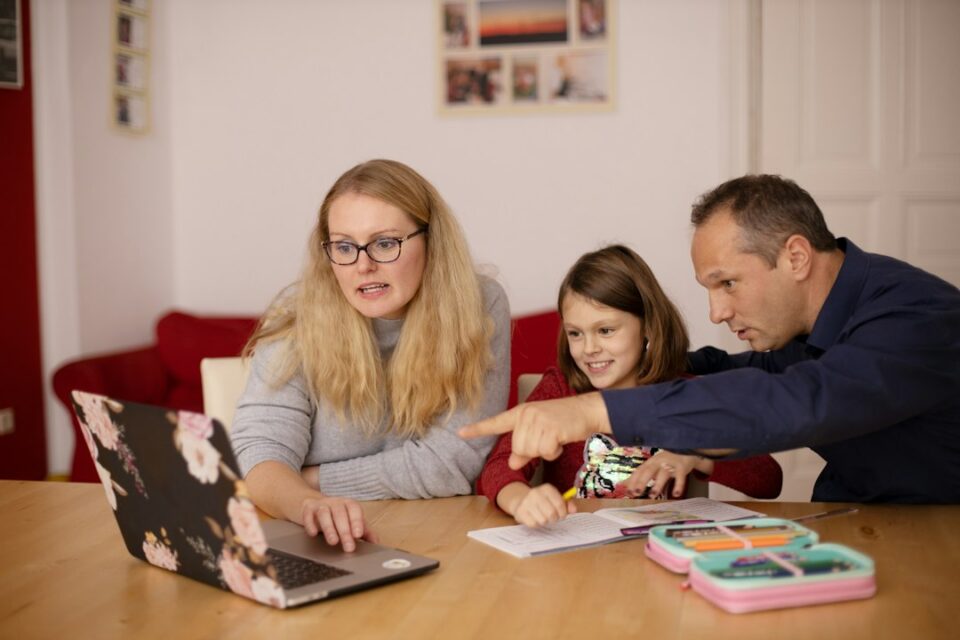
This guide uses family learning routines as the starting point for the practical advice below. Family learning routines do not need to look like a miniature school day. Most households have changing work hours, appointments, meals to prepare, younger children who need help, and older children who need room to work independently. A useful routine makes space for learning without asking family life to become perfectly predictable.
The goal is not to fill every hour with worksheets. It is to create a repeatable pattern that helps children know what happens next, helps adults plan with less friction, and leaves enough flexibility for real life. Some days may include a focused reading lesson and a science project. Other days may be built around a library visit, cooking, a walk, or a conversation that leads to a question worth researching.
I like to think of a learning routine as a household rhythm rather than a rigid timetable. The rhythm gives the day a shape. The family still has room to adjust the pace, swap activities, shorten a lesson, or return to an idea later. That balance is what makes a routine useful over time.
Start with a shared purpose
Before choosing subjects, apps, notebooks, or storage bins, decide what the routine is meant to support. A family may want a calm start to the morning, more independent reading, better follow-through on projects, or a stronger connection between schoolwork and everyday life. Each goal points toward a different structure.
If the main problem is rushed mornings, the routine may need a short opening block with breakfast, a read-aloud, and one clear task. If children are completing assignments but forgetting what they learned, the routine may need more conversation and review. If siblings are constantly interrupting one another, the household may benefit from shared activities paired with separate work periods.
Write the purpose in one sentence. Keep it plain enough that a child can understand it. For example, the purpose might be, We are building a steady part of the day for reading, questions, and useful work. That sentence becomes a filter for every later decision. An activity that creates clutter, conflict, or unnecessary preparation may not deserve a place in the routine, even if it looks impressive on paper.
A shared purpose also helps adults avoid comparison. One family may prefer a structured morning and open afternoons. Another may learn best in short blocks spread across the day. A routine does not need to copy another household to be effective for its own needs.
- Choose one or two outcomes that matter most right now.
- Decide which parts of learning should happen together.
- Identify the times of day when children have the most energy.
- List the household limits that the routine needs to respect.
- Keep a short record of what is working before adding more.
That final point matters. Families often respond to a difficult week by adding more rules, more materials, and more tracking. A calmer response is to ask which part of the routine is unclear or too demanding. The best structure usually becomes simpler after it has been tested.
Why family learning routines need a realistic daily shape
A daily schedule assigns a specific time to every activity. A routine uses a familiar order while allowing the clock to move. For many families, the second option is easier to maintain. Children can learn that breakfast is followed by reading, reading is followed by focused work, and focused work is followed by movement without needing every part of the morning to begin at exactly the same minute.
Try building the day around anchors. Anchors are events that already happen, such as breakfast, lunch, a quiet hour, or the end of the workday. Place learning blocks near those anchors instead of creating a separate system that competes with them. A household might use this pattern:
- Breakfast and a short conversation about the day.
- Shared reading or listening for fifteen to twenty minutes.
- One focused lesson or project block.
- Movement, outdoor time, or a practical household task.
- Independent reading, drawing, writing, or review later in the day.
This shape gives children several ways to learn without requiring a long stretch of sitting. It also creates natural stopping points. If the focused block runs long, the family can shorten the next activity instead of allowing the entire day to slide into frustration.
A useful test is the ten-minute test. Look at the routine and ask whether an adult could explain it to a tired child in less than ten minutes. If the answer is no, the plan may contain too many moving parts. Children do not need to memorize the full plan. They need to recognize the next step.
Use visible signals for transitions. A small kitchen timer, a simple card that says read, work, move, or a basket that holds the current materials can make the order easier to follow. These cues reduce the number of reminders adults have to give, which can change the emotional tone of the day.
Build in a recovery option. When a morning goes off track, the family should have a smaller version of the routine available. That might be one page of reading, ten minutes of handwriting, and a short discussion at dinner. The reduced version keeps the habit connected to the day without pretending that every day has normal conditions.

Make the learning space easy to reset
A dedicated classroom can be helpful, but it is not required. A dining table, a corner of a living room, or a rolling cart can work when the space has a clear purpose and a reliable reset process. The goal is to make materials easy to find and easy to put away.
Think in zones rather than furniture. One zone can hold books and notebooks. Another can hold art supplies or project materials. A third can hold items that need adult supervision, such as scissors, cooking tools, or small equipment. Zones help children understand where a task begins and where it ends.
Keep the active materials limited. A shelf full of every possible resource may look generous, but it can make choosing harder. Put the current week’s books and tools in one basket. Store extra materials out of sight and rotate them when a new topic begins.
The reset should take less than five minutes. Children can return books, stack papers, place pencils in a container, and put unfinished work in a labeled folder. If cleaning up takes twenty minutes, the problem may be the storage system rather than the child’s attitude.
Small environmental changes can improve focus without making the room feel strict. Place a clock where children can see it. Use a lamp or table mat to mark the work area. Keep a water bottle nearby. If siblings share a table, assign each child a small personal tray so materials do not spread across the whole surface.
- Store current materials together.
- Label unfinished work clearly.
- Keep a short list of supplies that need replacing.
- Leave one open area for messy or creative work.
- End the day with a quick reset.
For families who enjoy improving the feel of their home, the learning corner can connect with broader home organization ideas. A calm, useful room does not need to look like a classroom. The family-focused resources at G Home Decor can also provide inspiration for making shared spaces practical and welcoming.
Turn ordinary home tasks into learning activities
Children do not learn only when an adult announces a lesson. Home life offers steady opportunities to read, measure, compare, explain, plan, and revise. These moments become more useful when adults slow down enough to name the thinking involved.
Cooking can support measurement, fractions, sequencing, and writing. Ask a child to halve a recipe, compare two quantities, or write a short instruction card for someone who has never made the dish. The task does not need to become a formal worksheet. The real work is already present in the kitchen.
Shopping can become a practical exercise in budgeting and decision-making. Children can compare unit prices, sort items by category, make a short list, or estimate how many servings a package contains. Older children can research where a product comes from or compare two claims on a label. The adult can focus on reasoning rather than demanding a perfect answer.
Home projects support planning. Rearranging a room can involve measuring, sketching, and discussing tradeoffs. Caring for plants can lead to observation notes, simple charts, and questions about light or water. A small repair can invite children to identify the problem, list tools, and describe the steps in order.
Use conversation to turn experience into learning. Ask questions such as, What changed? What surprised you? Which part took longer than expected? What would you do differently next time? These prompts help children connect action with reflection.
Keep the activity anchored in the child’s real role. If a child helped plan dinner, let that child explain the choices. If a child measured a shelf, ask that child to describe how the measurement was checked. Ownership makes the learning more memorable than a forced summary written after the fact.
- Cooking: measure, scale, sequence, and explain.
- Shopping: compare, estimate, sort, and decide.
- Home projects: plan, sketch, build, and revise.
- Outdoor time: observe, record, classify, and question.
- Family decisions: listen, compare reasons, and reach an agreement.
Use short lessons and clear starting cues
Many children resist learning because the starting point feels vague. A direction such as work on math can create more uncertainty than action. A clearer cue might be open the blue notebook, complete the first two problems, and place a question mark beside anything that feels unclear.
Short lessons give children a visible finish line. For younger learners, ten to fifteen minutes may be enough for one focused activity. Older children may manage twenty-five to forty minutes, followed by a planned break. The right length depends on the task, the child’s energy, and the amount of support available.
Use a repeatable launch sequence. Put away unrelated materials, read the task aloud, ask the child to repeat the first step, and begin with one small action. This sequence can become automatic over time. The child learns that starting does not require a long negotiation.
Offer limited choices inside the structure. A child might choose between handwriting or typing, a science sketch or a labeled paragraph, or reading on the sofa or at the table. Too many choices can create delay, while two reasonable choices can provide a sense of control.
Use a stopping rule before the lesson begins. For example, stop after the planned page, after three useful observations, or when the child can explain the main idea. This keeps adults from extending a task simply because there is more material available.
A short lesson should still include a moment of retrieval. Ask the child to explain one idea without looking at the page. Invite a quick sketch, a two-sentence summary, or a demonstration. Retrieval does not need to feel like a test. It can be a natural way to find out what stayed with the child.
If a lesson repeatedly takes twice as long as planned, treat that as information. The task may be too difficult, the instructions may be unclear, or the child may need a different format. Adjusting the design is more useful than repeating the same demand with a louder voice.
Plan for different ages and attention spans
Families with more than one child often try to run one lesson for everyone. Shared learning can work, but the task needs different entry points. A younger child may draw what an older child explains in writing. One child may read a passage while another listens for key details. The topic stays shared while the output changes.
Use a three-part rotation when siblings need different levels of support. One child works with the adult, one child completes a familiar independent task, and one child does a practical or creative activity. After a set period, rotate the roles. The rotation does not have to be equal to the minute. It only needs to be predictable enough that children know their turn is coming.
| Age range | Useful focus | Helpful support |
|---|---|---|
| Early learners | Stories, movement, sorting, drawing, and simple counting | Short tasks, physical materials, repeated cues |
| Primary years | Reading fluency, basic writing, number sense, and projects | Visible examples, checklists, and brief adult feedback |
| Middle years | Research, writing, problem-solving, and longer projects | Clear outcomes, planning pages, and scheduled review |
| Teens | Independent study, discussion, practical skills, and portfolio work | Deadlines, choice of format, and regular planning meetings |
Independence should grow gradually. A child who can read directions but cannot organize materials may need a preparation checklist. A child who can complete work but avoids checking it may need a review step built into the routine. Independence is not the same as being left alone.
Make shared time genuinely shared. Read a chapter aloud, study a real object, cook a meal, visit a museum, or discuss a question that can support several levels of response. Then let each child continue with work suited to age and ability.
Watch for comparison language. Children may notice that one sibling finishes faster or writes more. The routine can shift attention toward personal progress by asking, What became easier? What did you figure out? What will you try next time? This keeps the family focused on learning rather than ranking.
When siblings interrupt one another, change the physical setup before giving another lecture. Headphones, separate trays, a quiet corner, or a short outdoor assignment may solve more than repeated reminders. Good structure uses the environment to carry part of the load.

Build reading, conversation, and creative work into the week
Reading gives the family a shared source of ideas. It can be fiction, biography, science writing, poetry, a magazine article, or a practical guide connected to a current project. The choice matters less than the habit of returning to words, asking questions, and noticing how an author explains something.
Keep a small reading menu. Include one book chosen by an adult, one book chosen by the child, and one short text that can be finished in a single sitting. This creates variety without turning the reading shelf into a contest.
Conversation works best when it moves beyond What happened? Ask what a character wanted, what evidence supports an idea, why a process worked, or what the author left unexplained. A child does not need a polished answer. The aim is to practice forming an idea and listening to another point of view.
Creative work gives children another way to show understanding. They might build a model, draw a map, record an audio explanation, make a labeled diagram, write a scene, or create a simple presentation. Different formats reveal different strengths, and they can make long projects easier to sustain.
Set a weekly project window rather than assigning a new craft every day. A project might last two weeks and include a question, a plan, a work session, and a short presentation. The final product does not need to be polished. The value often sits in the process of choosing, testing, and revising.
- Choose one shared text for family discussion.
- Let children select some independent reading.
- Keep a question list for topics worth exploring.
- Offer more than one way to show understanding.
- Save unfinished ideas for a later project instead of forcing them into one afternoon.
These habits create a richer learning culture than a routine built only around completion. Children begin to see that learning includes attention, curiosity, explanation, and making something that did not exist before.
Use weekly check-ins instead of constant correction
A weekly check-in gives the family a place to look at the routine without interrupting every activity. Choose a consistent time, perhaps Friday afternoon or Sunday evening, and keep the meeting short. Ten to twenty minutes can be enough.
Review three questions. What felt easy? What felt difficult? What should change next week? Ask each child to answer in a sentence or with a quick rating. Adults can add practical observations about time, materials, and household pressure.
Look for patterns instead of isolated problems. One difficult worksheet may not mean much. If writing becomes a struggle every afternoon, the task may need a shorter length, a different prompt, or more planning time. If reading goes well only in the evening, move the reading block rather than insisting that the morning is better.
Keep a simple record. A notebook can hold the week’s books, questions, project notes, and one sentence about progress. This record helps adults remember what has already been covered and helps children see that small efforts accumulate.
A useful review checklist includes:
- Were the main learning blocks short enough?
- Did each child have a clear starting cue?
- Was there time for movement and conversation?
- Which activity created the most interest?
- Which material was unnecessary or confusing?
- What is the smallest adjustment that could improve next week?
Use the check-in to remove friction, not to deliver a speech. A routine improves when the family can discuss it without treating every challenge as a character flaw.
Handle resistance without turning learning into a battle
Resistance has many causes. A child may be tired, confused, bored, hungry, worried about making a mistake, or seeking more control. The visible behavior may look similar, but the helpful response will differ.
Start by checking the task. Can the child explain what to do? Is the first step small enough? Does the child have the needed materials? A vague instruction can feel like a personal demand, while a clear first action gives the child somewhere to begin.
Separate difficulty from refusal. If a child says, I cannot do this, ask for the part that feels hardest. The answer may reveal that the child does not understand one word, one operation, or one transition. Solve that small barrier before discussing attitude.
Offer a short pause when the child is overloaded. A pause can include water, stretching, a walk around the room, or a change of position. Set a clear return point so the pause does not become an open-ended escape. For example, the child may return after five minutes and complete one example with help.
Use calm language that keeps the relationship intact. Try, Let us make the first step smaller, or We can change the format without dropping the idea. Avoid turning one hard moment into a judgment about the child’s effort, ability, or future.
Some resistance comes from too much adult control. If every detail is corrected, children may stop taking useful risks. Choose the parts that truly matter, such as safety, honesty, effort, or a required deadline. Let less important choices remain flexible.
Other resistance comes from an activity that has stayed too easy for too long. A child may need a harder question, a more authentic project, or an audience beyond the adult. Ask what would make the task feel more real. Sometimes the solution is not more pressure but a better reason to care.
If conflict repeats around one subject, change the setting and method before deciding that the child dislikes the subject itself. Math can move to cooking or shopping. Writing can begin as voice notes. Reading can start with a topic the child already follows. A new entry point can restore attention.
Maintain the routine through busy seasons
Routines are tested during travel, family events, work deadlines, seasonal activities, and weeks when the household has less energy. A routine that only works under ideal conditions will feel fragile. Build a smaller version for busy seasons before you need it.
The minimum version might include fifteen minutes of reading, one practical task, and a short conversation. Another family may keep a travel notebook, a math game, and an audio book ready for changing locations. The point is not to preserve every subject. It is to preserve the pattern of attention.
Prepare a portable learning kit. Include a book, a notebook, pencils, headphones if needed, a small folder, and one activity that does not require a table. Keep the kit together so an adult can carry it without searching through several rooms.
Use a maintenance list once a month. Remove materials that are no longer useful. Refill supplies. Review unfinished projects. Check whether the children still understand the order of the day. Small maintenance keeps the routine from becoming a pile of old intentions.
Seasonal change can also be a reason to refresh the topics. A garden, weather pattern, holiday tradition, local event, or family trip can provide a natural theme. A routine feels less stale when the content moves with the household’s real interests.
Protect the parts that matter most. If the family cannot complete every planned lesson, keep the shared reading, the weekly check-in, or the project conversation. Those anchors help the routine return when the schedule becomes calmer.
- Create a minimum version for difficult weeks.
- Keep portable materials in one ready-to-carry kit.
- Review supplies and unfinished work monthly.
- Refresh topics as seasons and interests change.
- Return to the full routine gradually instead of demanding a perfect restart.
A practical seven-day family learning plan
A sample week can help a family see how the pieces fit together. The plan below is not a prescription. It is a framework that can be shortened, expanded, or moved to different times of day.
- Monday, shared foundation: Read a short text together, discuss the week’s question, and complete one focused lesson. End with a simple plan for the project or topic.
- Tuesday, practice and application: Review one idea from Monday, then use it in a practical activity such as cooking, measuring, sorting, mapping, or gathering information.
- Wednesday, project work: Give children time to build, write, draw, research, or test something connected to the weekly question. Adults can offer short check-ins rather than constant supervision.
- Thursday, conversation and revision: Ask children to explain what they have learned so far. Let them revise a drawing, paragraph, model, or plan based on what they notice.
- Friday, presentation and review: Share the week’s work with the family. Each child can present one idea, demonstrate a skill, or read a short piece. Record one success and one next step.
- Saturday, real-world extension: Visit a library, park, market, museum, community event, or local place connected to the topic. If the day is busy, use a walk and a question instead.
- Sunday, light preparation: Choose books, check supplies, and decide which activities deserve attention next week. Keep this preparation brief and leave room for rest.
The value of this plan comes from its pattern. It moves from introduction to practice, project work, revision, sharing, and reflection. A child can begin to see learning as a process rather than a string of unrelated assignments.
Families can adjust the balance. A child who needs more reading practice may use the shared foundation for reading and keep the project shorter. A teen may replace a simple presentation with a written reflection or portfolio entry. A younger child may participate through drawing, movement, sorting, or oral storytelling.
Keep one blank space in the week. That open space can absorb a delayed appointment, a long conversation, a family outing, or a new interest. A routine with no margin becomes difficult to live with, while a routine with some room can keep working through change.
Let the routine serve the household
The strongest family learning routines are not the most elaborate ones. They are the ones children can recognize, adults can maintain, and the household can adjust when circumstances change. A good routine creates dependable openings for attention without turning every moment into an evaluation.
Begin with a shared purpose, build around real anchors, keep materials easy to reset, and review the pattern each week. Use ordinary tasks as learning opportunities, offer clear starting cues, and give children different ways to participate. When resistance appears, look for the barrier before adding pressure.
Over time, the routine becomes less about completing a perfect plan and more about building a home where questions have a place, effort can be seen, and learning fits into the texture of family life.