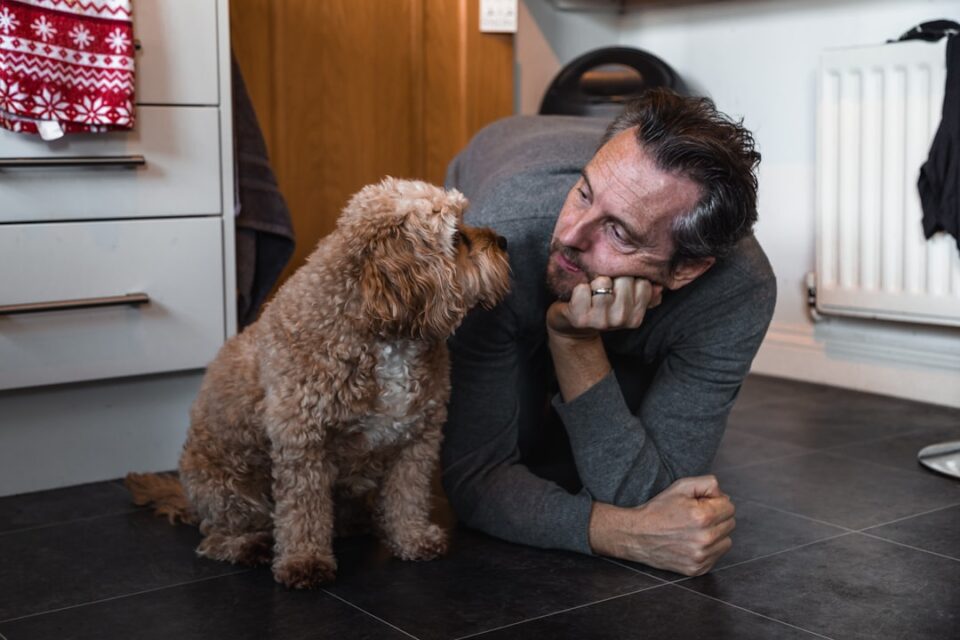
There’s a simple phrase that reshapes how dogs learn and how people teach them: positive reinforcement dog training. If you’ve tried a little of everything and want a humane, practical method that fits daily life, this guide gives you a complete, step-by-step plan to build reliable behaviors without harsh tools or confusing rules.
Explore more Pet Training resources on our site for additional checklists and home-friendly routines you can blend with this plan.
Why choose positive reinforcement: what the science and common sense both say
Positive reinforcement means rewarding the behaviors you like so they happen more often. That’s the short version. The slightly longer version blends learning science with everyday observation. Animals repeat behaviors that lead to good outcomes. When your dog sits and a reward follows, sitting becomes the dog’s best bet for getting more of what they want. The same principle works for polite door manners, loose-leash walking, coming when called, settling on a mat, and dozens of household skills.
Two things make this approach so practical at home. First, the rewards are flexible. Food, toys, sniff time, access to the couch, a game of tug, or a chance to greet a friend can all serve as reinforcement. Second, the method is easy to scale. You can start in a quiet room and later use the exact same principle at the park, during a delivery, or in a hallway with distractions. Because the plan stays consistent, your dog can succeed in a wide range of contexts.
Contrast that with punishment-heavy approaches. Punishment can suppress behavior in the moment, but it doesn’t teach what to do instead, and it can create side effects such as avoidance or confusion. Reward-based methods keep learning clear and help build confidence. Your dog learns a simple equation: offer the behavior that earns the good stuff. That clarity reduces conflict and builds trust between you and your dog.
There’s another reason this method fits real life: anyone in the household can use it. Kids can participate by handing a treat or tossing a toy when the dog lies down on a mat. Roommates can reinforce sits before meals. Even a quick “yes” and a piece of kibble from a jar by the door can maintain good habits. The system is adaptable and forgiving. If a day is chaotic, you can do two minutes of practice and still move forward.
How positive reinforcement dog training works
At its core, the process follows a simple loop: cue, behavior, reinforcement. You present a cue—perhaps a hand signal for sit or a verbal “down.” Your dog offers the behavior. You immediately deliver a reward. Timely reinforcement strengthens the exact action your dog just performed. That timing matters. Rewards delivered within one or two seconds help your dog connect the dots. If there’s a delay, your dog may guess which action earned the treat. Marker systems like a clicker or a short marker word (such as “yes”) help you pinpoint the right moment.
Placement and delivery matter, too. If you’re reinforcing a sit at the door, deliver the treat close to your leg where you want your dog to remain. If you toss the treat behind them, you might accidentally reinforce breaking position. Think of reinforcement like sculpting: each reward placement shapes the picture you’re building. For loose-leash walking, deliver the food beside your knee. For a down-stay on a mat, drop treats between your dog’s front paws to encourage relaxation.
Finally, criteria. Start with tiny, achievable steps. If you’re teaching “down,” first reinforce a head dip, then an elbow bend, then a full down. That approach—called shaping—lets your dog succeed at each step. If your dog stalls, you made the step too big. Split it into a smaller slice. With repetition, your dog begins to offer the next step proactively because trying earns rewards.
Getting started: the home trainer’s toolkit
Training doesn’t require a fancy setup. A handful of consistent tools makes daily practice smooth:
- Paychecks: Small, soft treats your dog loves. Kibble can work for easy sessions; upgrade to higher-value food in distracting spaces.
- Marker: A clicker or a short word like “yes.” The marker tells your dog exactly when they did the right thing.
- Treat pouch or pockets: Keep rewards within reach so you can pay fast.
- Leash and harness: A comfortable harness and a 6-foot leash make leash skills easier to build. Save retractable leashes for after skills are fluent.
- Mat or bed: A portable “home base” where your dog can settle. It becomes your best tool for meals, movies, and guest greetings.
- Management tools: Baby gates, exercise pens, and door hooks. Management prevents rehearsals of unwanted behaviors and gives you time to teach replacements.
Arrange your home to make the right behavior easy. Store treats near doors and in the kitchen. Put a mat where you spend time—beside the couch, near the dining table, in the entryway. The environment becomes part of the training plan, reminding everyone to reinforce good choices.
Decide on a few household rules early: where the dog sleeps, who feeds, whether the dog is allowed on furniture, how you’ll handle door greetings. Write them down so everyone follows the same plan. Consistency helps your dog learn faster because the same behavior earns the same outcome no matter who is in the room.
Core exercises you can teach this week
These foundation skills pay dividends across daily life. Keep sessions short—one to three minutes—and sprinkle them through the day. End while your dog is still eager.
Name game: fast attention
Say your dog’s name once. When your dog glances at you, mark and reward. Repeat a few times. In a few sessions, your dog will snap their head toward you when they hear their name. Add easy distractions later. If your dog doesn’t look, wait five seconds, then make it easier: move to a quiet room or reduce your distance from the distraction.
Hand target: a simple, portable cue
Present your hand a few inches from your dog’s nose. Most dogs will sniff or bump your hand out of curiosity. Mark and reward when their nose touches. Practice until your dog happily targets your palm. Now you can use the hand target to guide your dog off furniture, past a scary object, or into heel position. It’s a polite, non-forceful way to move together.
Sit and down: default self-control
Hold a treat close to your dog’s nose and slowly raise it; as your dog’s head tips up, their backend naturally lowers. Mark when their rear hits the floor and deliver the treat in position. For down, lure from a sit by moving the treat from nose to toes, then forward along the floor. If your dog stands up, reset and make the lure smaller. Fade the lure quickly: present the hand motion without food, then reward from the other hand.
Settle on a mat: your home’s off switch
Place the mat on the floor. When your dog looks at it, mark and toss a treat on the mat. Repeat until your dog steps on the mat. Mark and drop treats between the front paws to create a calm “stay while good things happen here” feeling. Add a release word to end the session. Gradually lengthen the time between treats. Soon the mat becomes your dog’s favorite lounge spot because lounging earns rewards.
Recall: coming when called
Start indoors in a quiet hallway. Crouch down, say your recall word—short and unique, like “here”—and deliver a jackpot of small treats when your dog arrives. Keep it exciting and pay every single time at first. Build the habit by playing recall ping-pong between two people. Later, add mild distractions and distance. If your dog hesitates, reduce difficulty rather than repeating the cue.
Leave it and drop: polite handling of tempting items
For leave it, place a treat in a closed fist. When your dog backs off or looks away, mark and deliver a different treat from your other hand. The message: moving away from the item makes better things appear. For drop, trade your dog a treat for an item they’re holding. Mark as the item leaves their mouth, then give the treat. Practice with easy objects before working up to toys. Over time, these cues become calm, cooperative habits.
House manners that make daily life easy
House rules stick when you reinforce the exact behavior you want and prevent your dog from rehearsing the alternatives. Here are common scenarios and practical routines.
Door greetings without jumping
Put the mat near the entryway. Before opening the door, cue your dog to the mat. Reinforce calm body language—four paws on the floor, a quiet mouth, soft eyes. Open the door a crack; if your dog pops up, close the door gently and wait for calm. Reward again when your dog settles. Repeat the open-close game. Guests can toss treats onto the mat, too. With consistency, the door becomes a cue to run to the mat.
Chewing and household items
Dogs chew to explore and to manage energy. Provide a variety of acceptable chew items—rubber toys, safe chews, stuffed food puzzles—and reinforce when your dog chooses them. When you see your dog approach a table leg or shoe, interrupt gently with a hand target, mark when they move with you, and deliver a chew toy. Reinforce a few seconds of chewing with calm praise or a tiny treat tucked into the toy. The message: choose the right object and good things follow.
Barking at windows or sounds
Identify the trigger. If passing dogs spark barking, manage the environment with window film or curtains during training. Teach your dog to move from the window to a mat when they hear a cue like “thank you.” Reinforce early—at the first head turn toward the mat—and build up to longer stays with quiet behavior. Pair reinforcement with gentle enrichment: snuffle mats, scatter feeding, or a brief scent game to relieve energy without fueling arousal.
Counter manners in the kitchen
Dogs learn quickly that countertops can pay off if even one crumb magically appears. Management solves most of this problem. Use baby gates and teach a “station” on a nearby mat while you cook. Reinforce periodically with one piece of kibble or a lick of a stuffed toy. If you drop food, calmly cover it with your foot or cue a “leave it” while you prepare to reward the choice to move away.
Loose-leash walking and recall in the real world
Loose-leash walking is a skill like any other. Begin where your dog can succeed—indoors or in the driveway. Stand still; when the leash is slack and your dog is near your hip, mark and deliver a treat next to your leg. Take a step. If the leash stays slack, mark and pay again. Build a rhythm: step, mark, treat. If your dog forges ahead, stop and wait. The instant the leash softens, mark and reward near your hip. Your dog learns that a slack leash makes progress happen.
Use the environment as reinforcement. Let your dog sniff a bush or explore a patch of grass as the reward for a few steps of loose leash. Alternate food rewards with access to interesting spots. Over time, your dog discovers that walking politely is the fastest route to the things they want. If a certain sidewalk overwhelms your dog, step back to an easier route or practice at a quieter time of day. Success builds momentum.
For recall outdoors, set up short, successful rehearsals. Use a long line for safety while you practice in open spaces. Call once, then reinforce like you mean it when your dog arrives—scatter several treats on the ground, play tug for ten seconds, or sprint together for a few steps. If your dog hesitates, you’ve reached beyond their skill for that setting. Reduce the distance, pick a less distracting area, and rebuild. The goal is a long history where coming to you reliably pays off.
Clicker training or marker word: which to choose?
Both are just ways to say “that” at the exact moment your dog does the right thing. A clicker is consistent and easy to hear in busy environments. Many people find it helpful when teaching precise behaviors, such as a tidy sit or a smooth down. A marker word like “yes” is always with you—even if the clicker isn’t—and can be softer for sound-sensitive dogs. You can switch between the two based on context: a clicker for shaping fine details at home, a marker word for everyday scenes.
Whichever you choose, keep the marker meaningful. Always follow it with a reward, especially while your dog is learning. Over time, you can vary the reward—sometimes food, sometimes a short sniff break—to keep motivation high without creating expectations of big payouts every single time.
Common mistakes and how to fix them
Every trainer makes mistakes. The key is spotting patterns and adjusting. Here are issues you may encounter and practical fixes:
- Paying too late: If your dog breaks the sit before the reward arrives, your timing might be off. Use a marker to capture the sit the moment it happens and deliver the treat quickly.
- Asking for too much too soon: If your dog stalls or turns away, your criteria jumped. Split the step into a smaller slice. Reinforce frequently to rebuild momentum.
- Repeating the cue: Saying “sit sit sit” teaches your dog that multiple repeats are normal. Say it once, pause, then help your dog with a lure or a hand target if needed. Reinforce and try again.
- Accidental reinforcement: If your dog jumps for attention and you pet them, you just reinforced jumping. Instead, turn slightly away, wait for four paws on the floor, then reinforce that polite stance.
- Inconsistent rules: If one person allows couch time and another doesn’t, your dog will test both options. Decide as a group and stick to it for a month. Consistency builds habits.
- Underestimating stress: Big environments can flood a dog with sounds and scents. If learning falls apart outside, return to an easier setting and add distance from triggers. Short, successful sessions beat long, frustrating ones.
When progress slows, change one variable at a time: the environment (quieter or busier), the reward (more or less valuable), the criteria (easier or harder), or the timing (clearer markers). Keep a brief log of what you changed and how your dog responded. That record makes it easier to spot what helped.
Living with multiple people, kids, or multiple dogs
Households vary. The method stays the same. If you live with kids, give them simple jobs, like dropping a treat onto the dog’s mat when they see four paws down or saying “yes” when the dog looks at them and handing a tiny treat. Remind kids to keep cues short and to place treats low and close to the dog’s body so the dog doesn’t jump up to snatch. Supervise early interactions so both dog and child learn predictable patterns.
For multiple dogs, train separately at first. Give the resting dog a stuffed enrichment toy in another room while you work with the active dog. Swap. Once each dog understands the exercises, bring them together for easy versions—two dogs on two mats, each receiving calm reinforcement. Practice taking turns so the waiting dog earns reinforcement for staying relaxed. If competition grows, return to separate sessions and rebuild at a lower difficulty, then try again with fresh management in place.
For roommates or partners, set shared goals: a five-minute mat practice after dinner, one short recall game in the yard, one calm door greeting drill on weekends. Put the plan on the fridge so everyone can mark a check when they’ve done a session. Visibility keeps motivation high and spreads the work fairly.
Building a long-term plan and tracking progress
Great behavior is a habit, not a one-time project. Use this cadence to turn training into a sustainable routine:
- Daily micro-sessions: Two or three sessions of one to three minutes each. Rotate skills: sit-and-stay on the mat today, leash skills tomorrow, recall on Saturday morning.
- Weekly field trip: A short practice in a new environment—parking lot edge, a quiet park bench, a friend’s entryway. Keep criteria low so your dog wins early in the new place.
- Monthly review: Choose two behaviors to maintain and one to build. Maintenance prevents backslides, while a single stretch goal keeps training fresh.
Track a few simple metrics: how many sessions you completed, how quickly your dog responded to a cue in a given environment, and how many reinforcements you needed to maintain the behavior. Improvement shows up as shorter response times, fewer prompts, and the ability to perform skills in busier places. If a metric stalls for two weeks, that’s a signal to step back a level, sweeten the reward, or adjust the environment.
Remember to thin reinforcement gradually instead of abruptly. Move from continuous reinforcement (every correct response earns a reward) to variable reinforcement (sometimes food, sometimes a toy, sometimes access to a sniff). Keep the core association positive by continuing to pay generously when you ask for big work—such as recalls away from play or calm behavior around deliveries. That mix keeps behaviors strong without making you dependent on treats for everyday life.
Beyond basics: enrichment and lifestyle that support good behavior
Training benefits from the right lifestyle. Dogs need outlets for species-typical behaviors like sniffing, chewing, digging, and problem-solving. Provide structured enrichment that doesn’t rev up arousal. Short sniff walks, scatter feeding in the yard, or a cardboard “treasure box” with a few treats hidden inside can satisfy curiosity without tipping energy sky-high. Rotate activities so novelty stays interesting.
Sleep matters, too. Many dogs behave better when they have predictable rest. Create quiet zones at home where your dog can nap without disruption. Pair rest with a cue like “go to bed” and reinforce calm settling. A rested brain learns faster and responds with more patience.
Finally, relationship. Training works best when your dog trusts that you’ll be consistent and kind. Keep cues short, reinforcement frequent, and expectations fair for the setting you’re in. If a day goes sideways, lean on management and try again tomorrow. The goal isn’t perfection; it’s progress made with clarity and care.
A quick reference checklist
- Keep treats handy in multiple rooms.
- Use a marker—clicker or “yes”—to nail timing.
- Reinforce where you want your dog to be (placement counts).
- Split big skills into tiny steps and celebrate each success.
- Limit sessions to a couple of minutes; stop while it’s still fun.
- Build behaviors at home before trying them in busy places.
- Use the environment as a reward—sniff time, access, greetings.
- Log brief notes so you can see patterns and progress.
- Keep household rules consistent and visible for everyone.
Step by step, your dog learns what works, and you learn how to teach with clarity. The approach scales from quiet rooms to crowded sidewalks because the rule stays the same: reward the behavior you want to see again. That’s the heart of training with reinforcement—and the reason it fits real homes and real lives.